
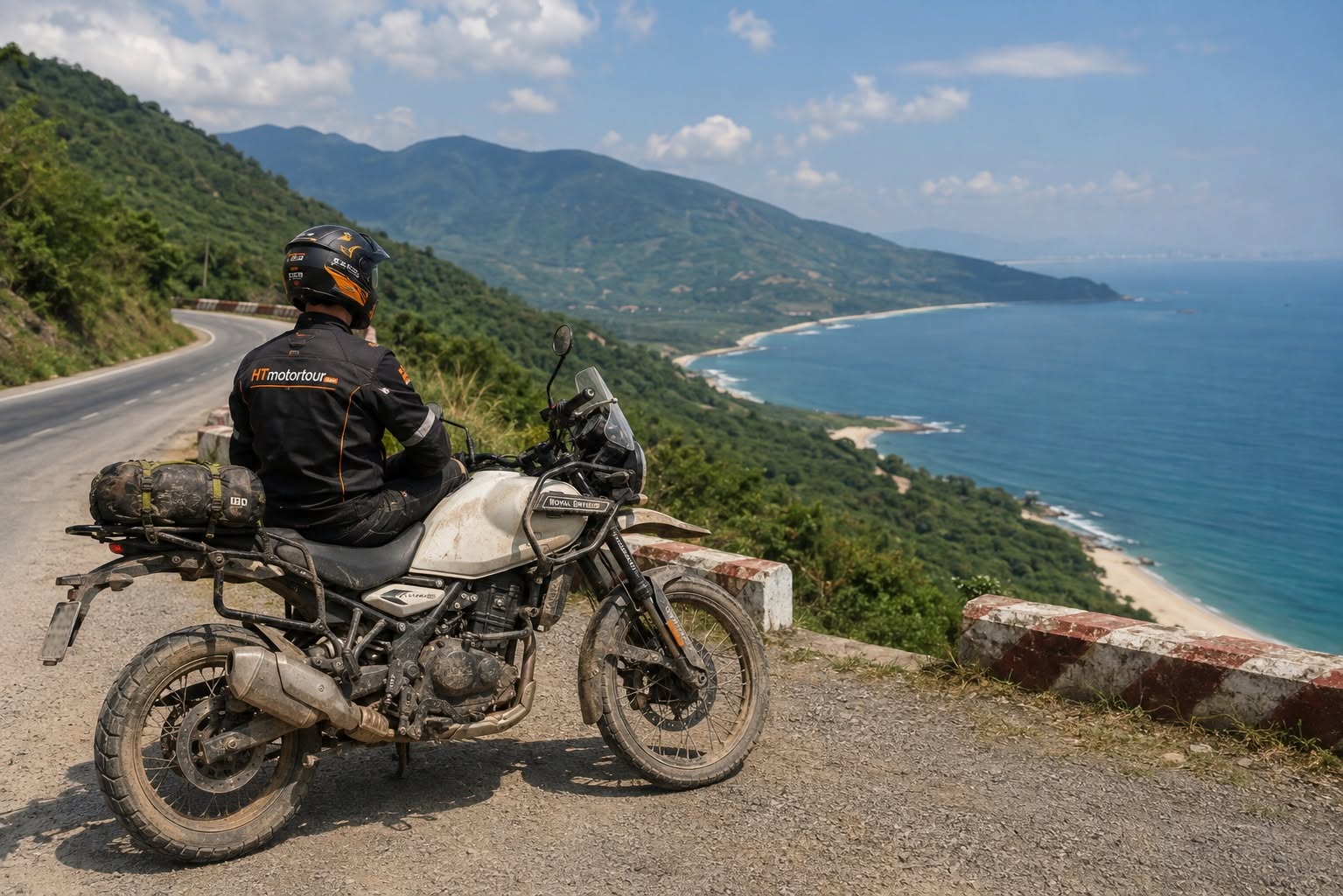

If you’re deciding whether the Central Vietnam Motorcycle Tour is the right route for your trip, the more useful comparison isn’t Hoi An versus Hue — it’s whether you want genuine off-road highland riding alongside history and coastline in the same trip.
The Central Vietnam Motorcycle Tour is a 10-day, 9-night loop from Hoi An through Hue, the former DMZ and Phong Nha’s UNESCO caves, before climbing into the Kon Tum highlands and looping back to the coast. It mixes imperial history, wartime sites and a real off-road stretch that most first-time Vietnam riders never see.
It suits experienced riders who want more than a coastal cruise — and who are comfortable with a few off-road days — more than first-timers looking for an easy, flat itinerary.
Quick Facts
| Duration | 10 Days / 9 Nights |
| Start / End | Hoi An → Hoi An (loop) |
| Group size | Up to 12 riders |
| Languages | English, Vietnamese |
| Difficulty | Level 1–3 (mostly paved, off-road sections Kon Tum–Pleiku) |
| Bikes used | Honda XR150L, CRF150L, CRF250L, CRF300L, or Yamaha WR250R |
| Price | Contact HTmotortour to confirm current pricing |
The Route — Hoi An to Hoi An in 10 Days
Unlike the Ha Giang Loop (mountain switchbacks) or the Ho Chi Minh Trail tour (north-south highway riding), the Central Vietnam Motorcycle Tour is a loop built around three distinct experiences: the imperial and wartime history of Hue and the DMZ, the karst landscapes of Phong Nha, and a genuine off-road stretch through the Central Highlands around Kon Tum that most first-time Vietnam riders never see.
Days 1–2: Hoi An → Hue → DMZ. Riders leave Hoi An along the coast, crossing Hai Van Pass — the same stretch of road Top Gear called one of the world’s best coastal drives — before reaching Hue, Vietnam’s last imperial capital. Day 2 covers the Imperial City, then rides north through the former demilitarized zone: Hien Luong Bridge, the historic dividing line between North and South Vietnam, and the Vinh Moc Tunnels, where an entire village lived underground during the war.
Days 3–4: Phong Nha → Khe Sanh. The route follows the Ho Chi Minh Highway into Phong Nha-Ke Bang National Park — one of the oldest karst landscapes in Asia, with over 65km of caves and underground rivers. From there, riders head west along the original Ho Chi Minh Trail toward Khe Sanh, the site of one of the war’s longest battles.
Days 5–7: Into the Highlands. This is where the Central Vietnam tour genuinely diverges from every other HTmotortour route. Riders continue along the trail through Prao and Kham Duc into ethnic minority territory, then climb into the Central Highlands toward Kon Tum — with a real off-road section through rubber plantations and mountain villages that see very few foreign visitors. This stretch is the reason the tour carries a Level 3 rating for parts of the route, not the coastal or historical sections.
Days 8–10: Highlands to Coast. The route descends from Mang Den through Pleiku, tracing the East Ho Chi Minh Trail back toward the coast via Quang Ngai, with a stop at the My Lai memorial site — one of the most sobering stops on any Vietnam motorcycle tour — before returning to Hoi An.
Central Vietnam vs Ha Giang Loop vs Ho Chi Minh Trail: Which Fits You?
If you’re deciding between HTmotortour’s three flagship multi-day routes, here’s the honest comparison:
| Ha Giang Loop | Ho Chi Minh Trail | Central Vietnam | |
|---|---|---|---|
| Terrain focus | Mountain switchbacks, cliff-edge roads | Highway + jungle trail | Coastal + genuine off-road highlands |
| Difficulty | Level 2–3 throughout | Level 1–2, mostly paved | Level 1–3, off-road in Kon Tum |
| Main draw | Scenery, dramatic mountain roads | War history, long-distance riding | History + Central Highlands culture |
| Best for | The classic Vietnam mountain shot | Distance and depth of history | Coast, war sites, and highland off-road |
| Starting point | Hanoi | Hanoi | Hoi An |
Riders who’ve already done Ha Giang and want something different — rather than more mountain switchbacks — tend to get the most out of this route. It’s also the only one of the three that doesn’t start or end in Hanoi, which makes it a natural fit for riders arriving via Da Nang.
Who Should NOT Take This Tour
The tour is also long — 10 consecutive riding days with only one true rest day (Day 9, depending on itinerary confirmation with your guide). If you’re short on time, HTmotortour’s 6-Day Off-Road Central Vietnam Tour covers a shorter version of similar terrain from Hoi An to Nha Trang.
Which Bike Fits This Route?
The standard tour bike is the Honda XR150L — light, reliable, and easy to handle on the mixed paved/off-road terrain between Hoi An and Kon Tum. It’s the right choice for most first-time riders on this route.
If you have more riding experience and want extra power for the highland stretches, HTmotortour also offers upgrade options for this tour:
- Honda XR190L — a natural step up from the XR150L, with more low-end torque for the Kon Tum climbs without losing the light, forgiving handling newer riders rely on.
- Honda CRF300L — the more capable option for riders who want a proper adventure bike for the off-road sections, at the cost of a heavier, taller machine.
- Royal Enfield Himalayan 450 — comfortable on the long paved stretches between Hue and Phong Nha, though its extra weight is more noticeable once the road turns loose near Kon Tum.
- CFMoto 450MT — a genuine adventure-touring alternative for riders who want more highway comfort on the coastal days without giving up off-road capability entirely.
None of these are strictly necessary — the included XR150L handles this route well. Talk to your guide about your experience level before upgrading; the Kon Tum off-road stretch is where bike choice matters most.
What’s Included
- Experienced motorcycle guide
- Dirt bike (XR150L, CRF150L, CRF250L, CRF300L, or WR250R)
- Fuel and spare parts
- Accommodation — homestays and standard hotels along the route
- All meals with non-alcoholic beverages
- Entrance fees, permits, boat trips where applicable
- Support vehicle for luggage and backup bike
- Personal travel insurance
- Riding gear (available for rental)
- Alcoholic drinks
- Single room supplement
- Flights before/after the tour
- Tips
Best Time to Ride, Section by Section
Central Vietnam’s weather doesn’t move the same way across this route — what’s dry in Hoi An isn’t always dry in the highlands:
| Section | Best months | Notes |
|---|---|---|
| Hoi An – Hue – DMZ (coastal) | February – August | Dry season for the coast; avoid Sept–Jan, when central coast typhoon risk peaks |
| Phong Nha – Khe Sanh | February – August | Same coastal pattern; caves open year-round but trails get slick in heavy rain |
| Kon Tum highlands (off-road) | Feb – Apr, and Oct – Nov | Cooler, firmer ground; Jun–Sep rain makes off-road sections harder and less predictable |
If your dates fall outside these windows, the tour still runs — just talk to your guide about realistic daily distances, since the Kon Tum stretch is the section most affected by rain.
Choosing a Central Vietnam Tour Operator: What to Check
Central Vietnam has no shortage of operators offering some version of this route. A few honest questions worth asking before booking with anyone:
- Does the price include a support vehicle, or is that an extra fee? Some operators quote a lower headline price and add this back later.
- What happens if your bike breaks down in the Kon Tum highlands — one of the more remote stretches of the whole route? Ask specifically, not generally.
- Is the guide a dedicated motorcycle guide, or a driver following in a car? These are different experiences, especially through the off-road sections.
- Are reviews verifiable — Google, TripAdvisor, or Facebook — and recent, not just from years ago?
Frequently Asked Questions
How difficult is the Central Vietnam Motorcycle Tour?
Do I need a motorbike license to ride in Vietnam?
What’s the best time of year for this route?
Can I combine this with the Ho Chi Minh Trail tour?
Is this a guided or self-guided tour?
Explore More Ways to Ride Central & North Vietnam
- Ho Chi Minh Trail on Royal Enfield Himalayan 450 — 10-Day Rider Guide — the north-south route this tour connects with
- 6-Day Off-Road Central Vietnam (Hoi An – Nha Trang) — a shorter version of similar terrain
- North Vietnam Adventure Tours — for riders planning a separate trip to Ha Giang, the Northeast, or Northwest
- Self-Guided vs Guided Motorcycle Touring in Vietnam — if you’re still deciding how you want to ride
🏔️ Ready to Ride Central Vietnam?
Send HTmotortour your travel dates, group size, and riding experience, and the team will confirm availability and current pricing for the Central Vietnam Motorcycle Tour.
0 Comment